The Sincerest Form: Exploring Sustainability, Biobased Materials, and the Theater of “Fake Nature” with Sara Darle Olsson
As part of our collaboration with the Architectural Design department of the Gerrit Rietveld Academie in Amsterdam, Weidmann Fiber Technology had the opportunity to connect with graduating students who explored the creative and technical possibilities of biobased material such as Maplex Board in their final projects.
In this interview, we speak with Sara Darle Olsson, a Swedish designer whose work explores the intersection between nature, materiality, and perception. Her graduation project “The Sincerest Form” reflects on the concept of “fake nature” and the complex relationship among authenticity, design, and sustainability.
Here, Sara shares her reflections on material choice, her experience working with Maplex, and how she envisions the future of sustainable design.
Can you tell us a bit about yourself, your graduation project, and what motivates you to prioritize sustainability in your design projects?
My name is Sara Darle Olsonn. I’m from Sweden, and a large part of my growing up there was in close relation to nature. With an abundance of forests, all within proximity to the cities. I am now based in Amsterdam, and when I moved to the Netherlands, I found it difficult to relate to the country as almost all its land is used for agriculture or other industries. It also made me reconsider whether the Swedish nature I grew up with was as truly wild as I had previously thought. My thesis dove into this dilemma of what “real” or “fake” nature may mean to us, why we desire its “raw” form so much, and how that desire comes from a complicated history of exploitation.
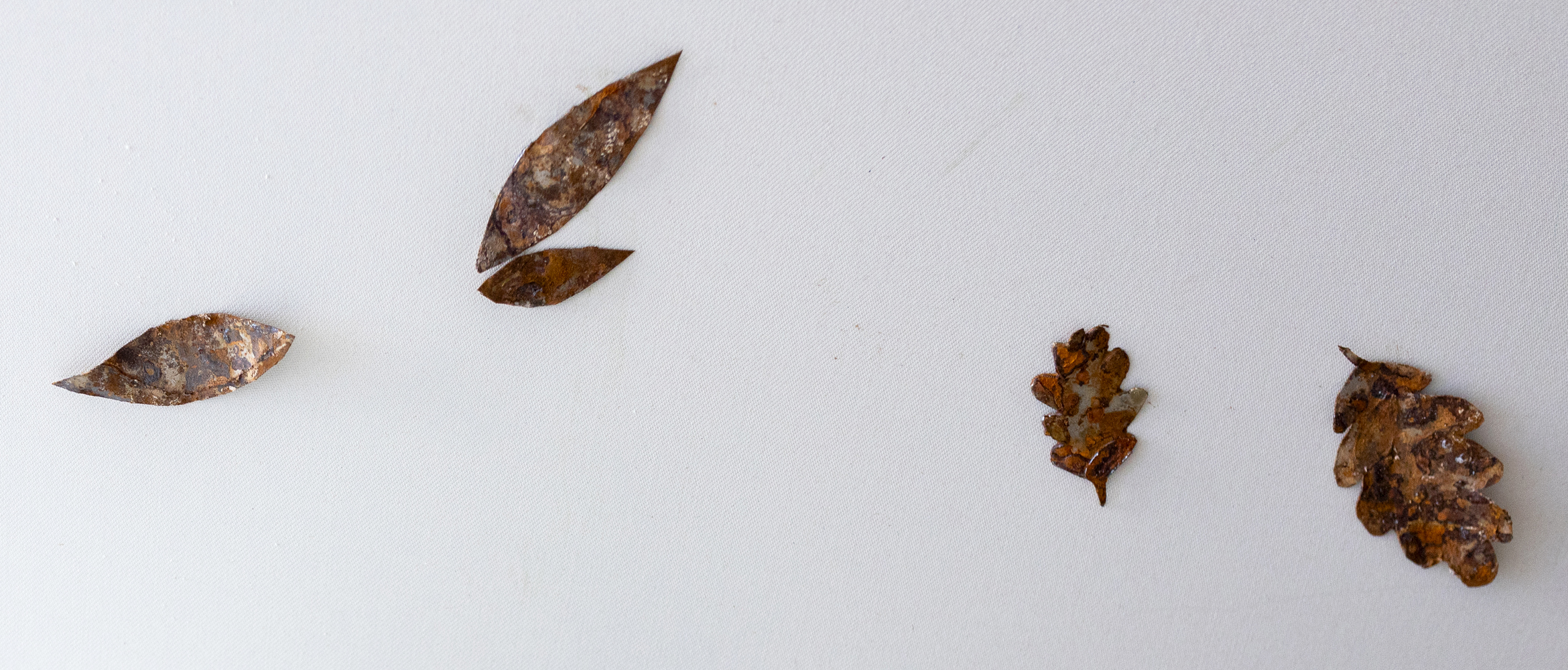
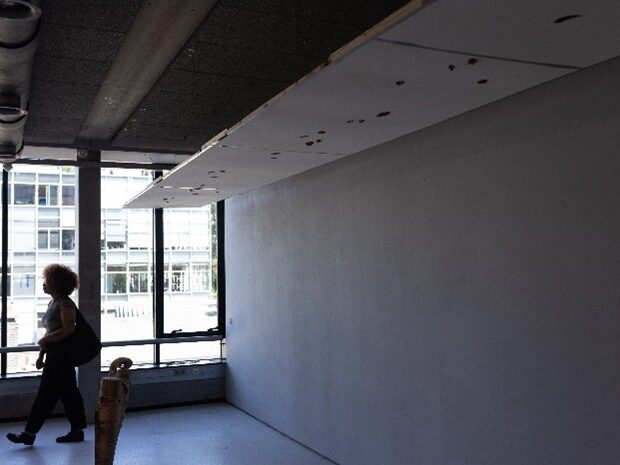
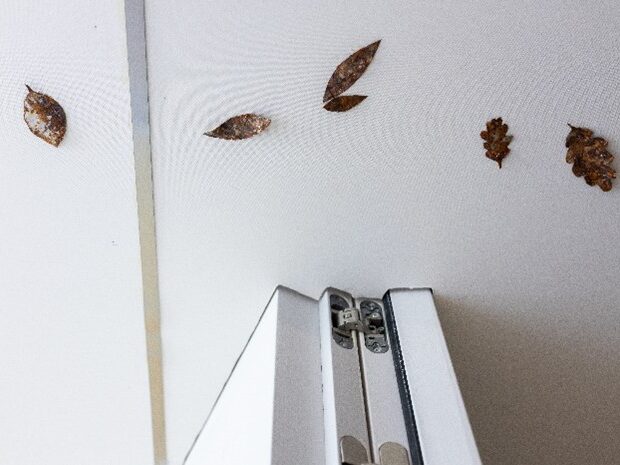
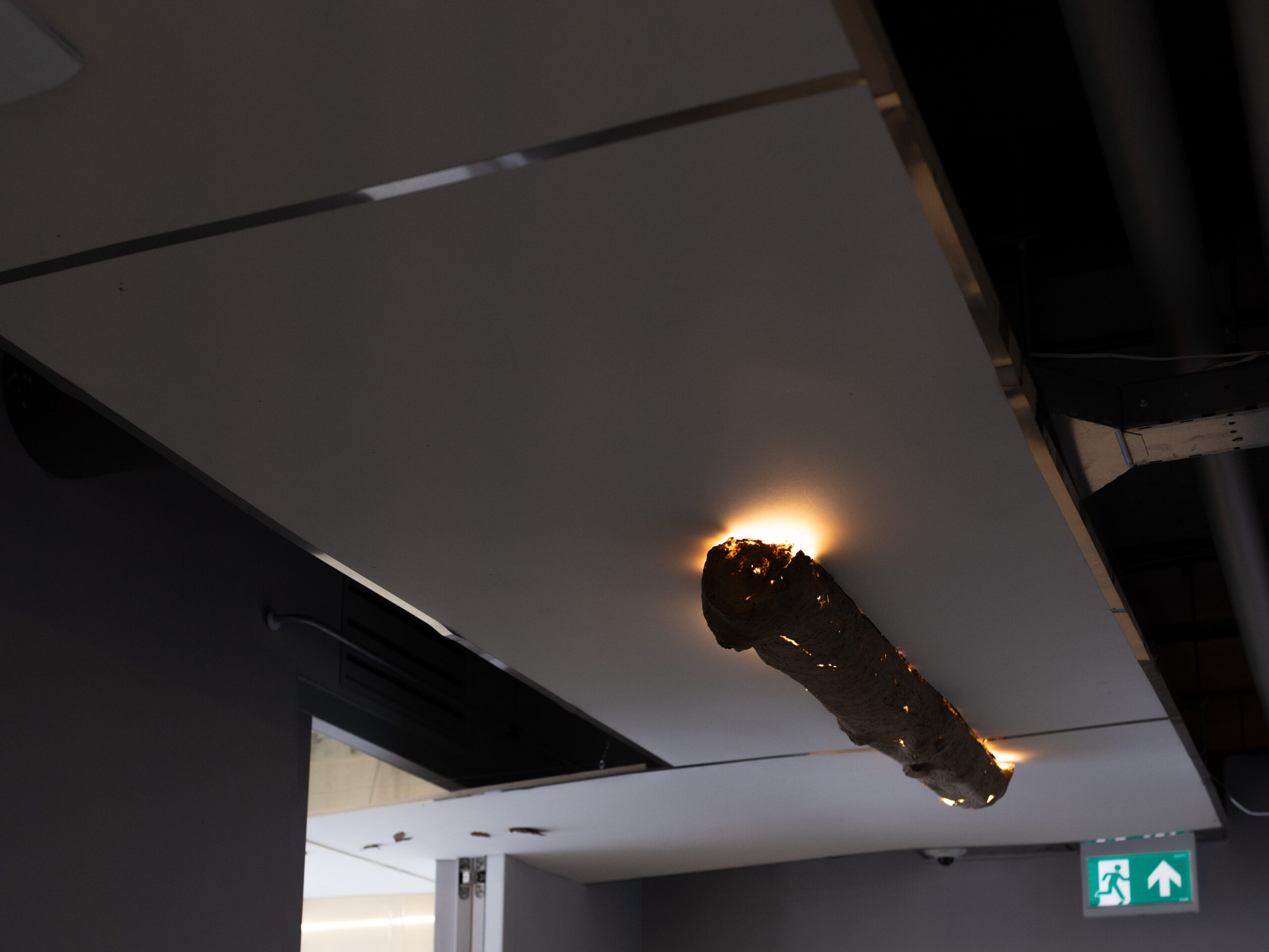
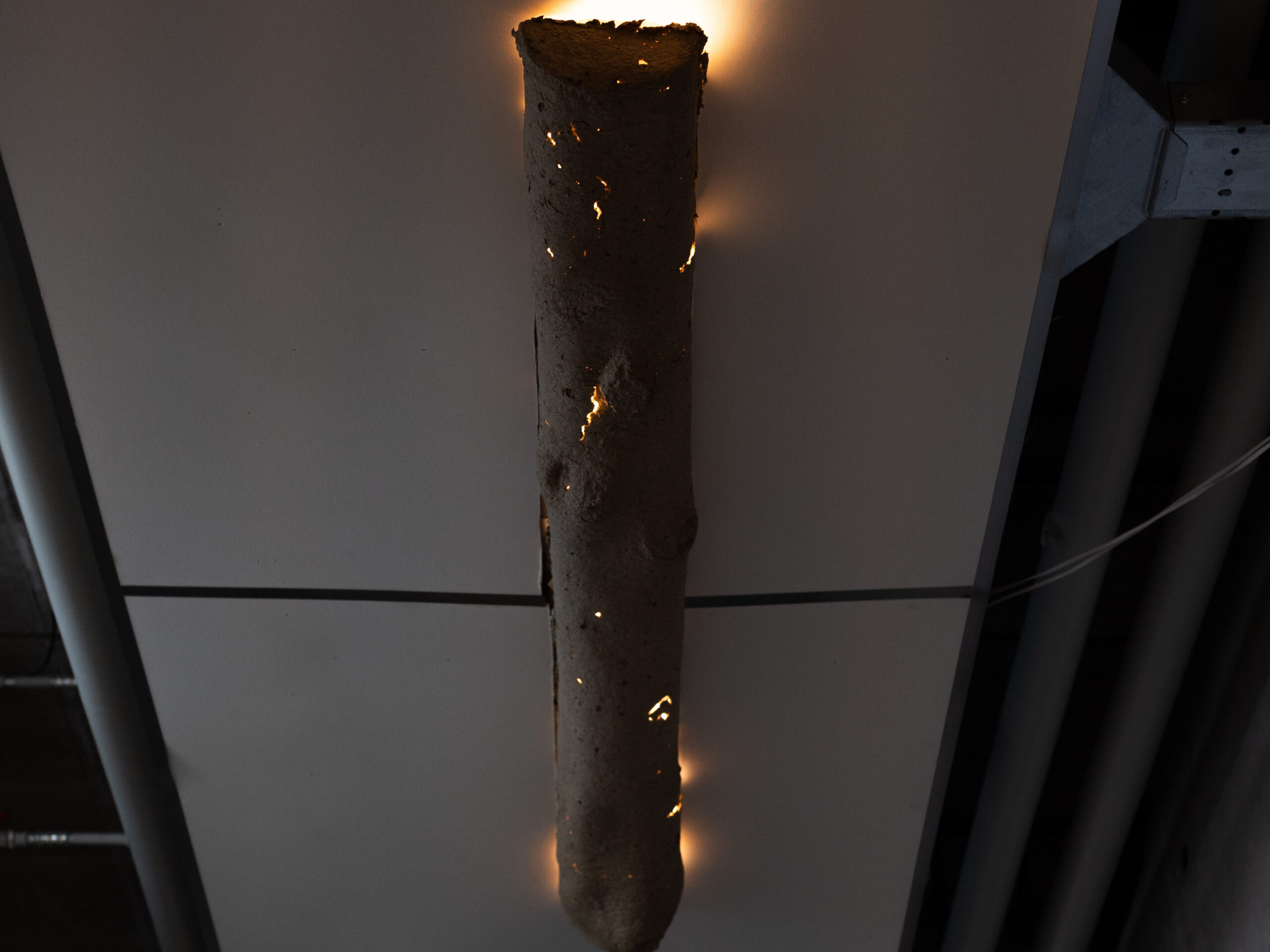
These thoughts became the foundation of my graduation work, which focused on treating “fake nature” as if it were theater: going all the way, making it authentically fake. I used Maplex in combination with repurposed wood frames to create a drop ceiling. The ceiling was an intervention in the building, as well as a backdrop for sculptural work, an upside-down stage, if you will. The objects placed in the ceiling were all replicas of objects from nature, frozen in time in more permanent materials.
The topic of nature naturally intersects with the topic of sustainability, especially in the context of choosing materials that reflect an honest and responsible approach. A main priority of mine is to make the sustainable choice the obvious choice.
What inspired you to choose sustainable biobased design materials and Maplex specifically for your graduation project?
For this project specifically, I needed a lightweight but solid material, and Maplex proved to be an ideal candidate for this. A bonus was that it came in very standard measurements, which made the planning and execution of the project easy to manage.
How did the performance and functionality of Maplex meet your expectations during the project’s development? Were there any surprising advantages or limitations of using this material?
For this project specifically, I didn’t need Maplex to do much else than become a uniform, strong, smooth surface, and for this, it was ideal. Most importantly, it was both sturdy and lightweight. I was able to cut into it with ease using a saw, paper knife, or Dremel tool (depending on thickness), and this allowed me to create interesting cutouts where the ceiling met architectural elements of the building.
How was your project received by your peers, professors, or industry professionals, especially in terms of material use and sustainability?
Some were surprised by the sustainable aspect of the work as it didn’t necessarily “look” sustainable; even though it was built completely with sustainably made, easily recyclable, and/or already recycled material. It had a “clean finish,” showcasing that sustainability can appeal to many different aesthetics. Furthermore, a lot of people did not realize the ceiling was built by me, as it looked like it already belonged to the building, unless one looked closely. My favorite moments were when people realized how the material wrapped unnaturally around certain building elements, and the whole construction suddenly became visible to them.
How do you envision the role of sustainable materials evolving in the design industry?
Necessary and imminent. I see it as an exciting, creative challenge rather than an annoyance, and I feel strongly that anything made in that process becomes more interesting as it takes on additional meaning.
What advice would you give to other designers for the overall material choices in their projects?
Consider the end from the beginning. Ask yourself what happens once the project is completed?
What are your aspirations and plans for the next year in design?
I’m currently working on scenography projects and spatial design for music events. I’m hoping to evolve within stage design and larger installation work, next to a more personal writing practice. This is something that I’m excited to take my time with and see develop over time.
What impact would you like to make on the environment and society in general as you continue your design career?
Hoping to inspire others to consider a sustainably focused approach in their making. I want to create works that ask interesting questions but also allow you to engage with them on a (sometimes literal) surface level.
Photos by Anastasios Vlachos