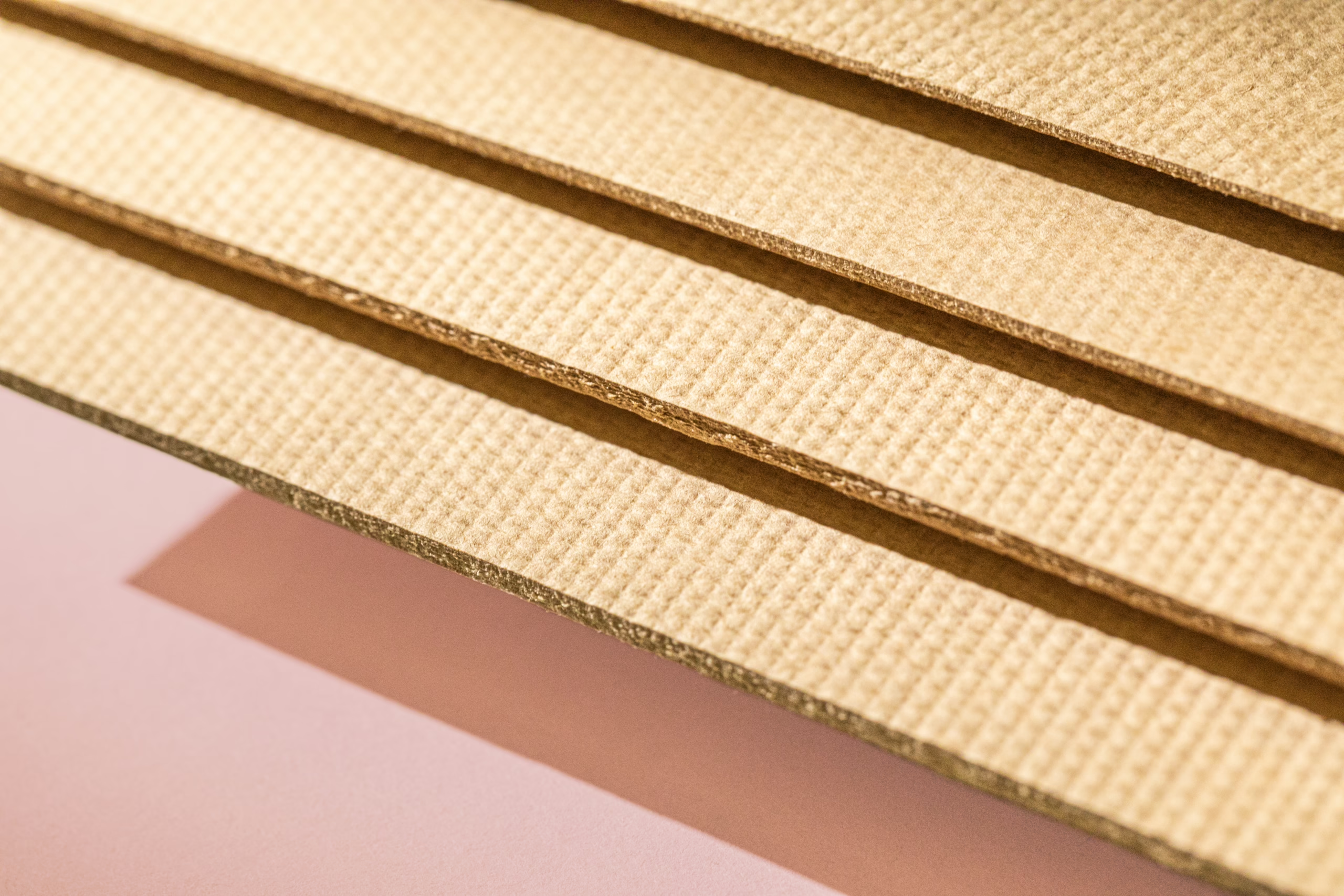
Contour Collection
Form, shape,
and mold your design
The Contour Collection has a softer and smoother appearance, which makes it an ideal substrate for contoured shapes. This collection includes Maplex C and Maplex Form grades, allowing architects and designers to realize their designs into compelling forms and shapes.

Maplex C
Biodegradable and recyclable fiber-based pressboard, Maplex C offers a unique combination of natural beauty and practical formability.
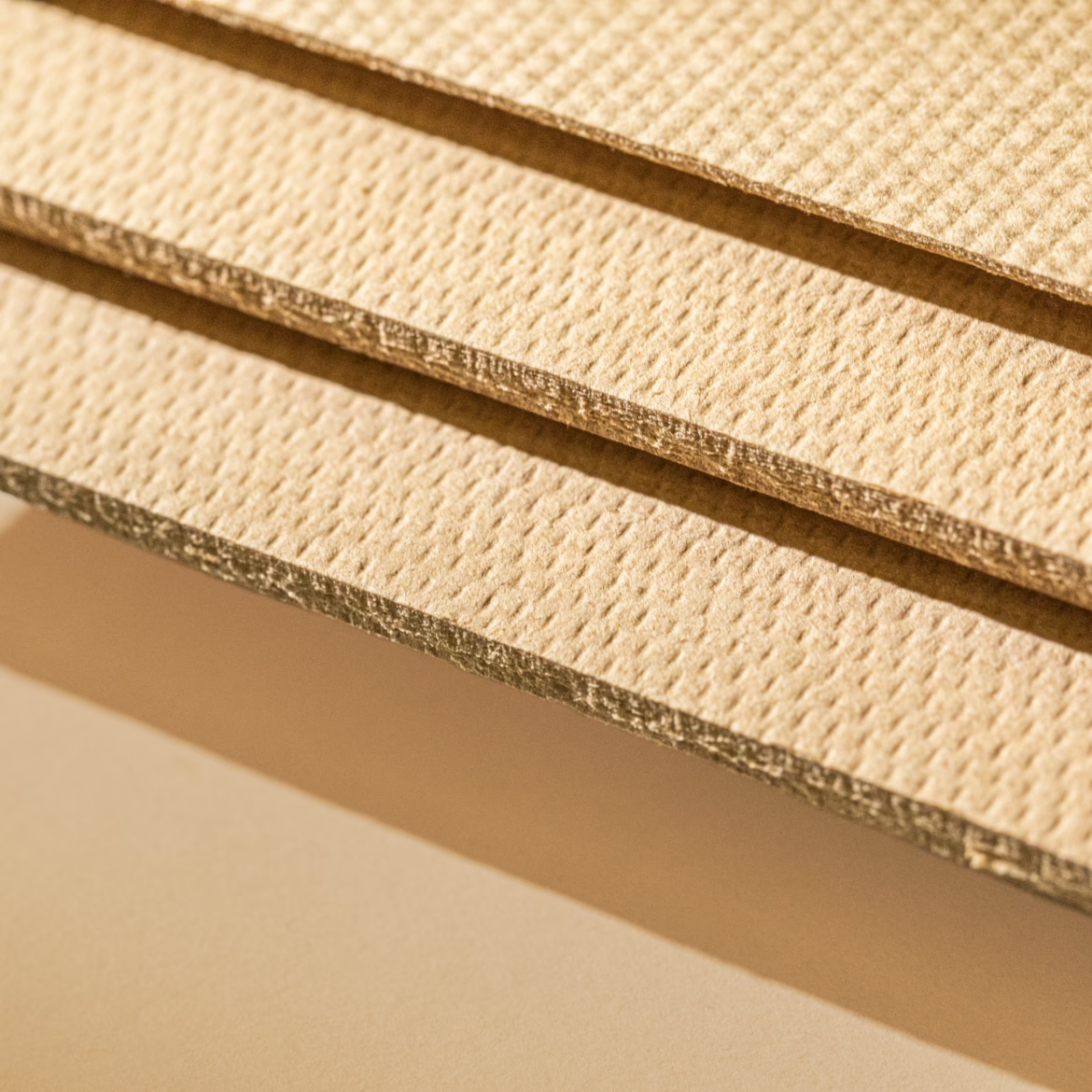
Maplex Form
This low-density, highly formable pressboard offers an organic appeal to designers seeking authenticity and sustainability in their materials.
Product benefits

Suitable for applications that require flat or tightly curved and rounded shapes

Minimal risk of breaking, wrinkling, creping, or
fiber separation

Shapeable pressboard that maintains the integrity of the
outer and inner curve
About Maplex board


Does your bold vision require our expertise? Let’s work together.
Frequently asked questions
As Maplex may be finished with many different products, we do not recommend any particular one. However, if you are looking for finishes that complement the environmentally friendly nature of Maplex, please consider these companies in your next projects:
Maplex contains nothing but wood fibers and is therefore not as dimensionally stable as panel products impregnated with petrochemical resins. The wood fibers in Maplex are bound using only heat and pressure. Maplex will expand and contract with changes in humidity and will also absorb liquid water, causing warpage and discoloration. The effects of humidity and liquid water can be mediated by a combination of providing adequate structure in designs utilizing Maplex and applying a sealer to all surfaces and edges.
If you are looking for moisture-resistant coatings that complement the environmentally friendly nature of Maplex, please consider these companies in your next projects:
Due to its density and fiber strength, Maplex machines more like aluminum than wood. Most woodworking tools and metalworking processes are applicable to Maplex, however, do not use liquid coolant. Tools must be kept very sharp, and cutting speeds must be adjusted to avoid smoking or burning. Maplex may be sawed, drilled, sheared, routered, and punched.
Although there are no specific guidelines for hand bending Maplex “in the field”, thin sheets (less than 1/8” or 3.2 mm) are quite flexible. They may be used to create smooth, sweeping curves by bending and fastening the material into position against an underlying substructure. The substructure can be almost anything (plywood, MDF, dimensioned lumber, etc.) that is stable and rigid. Making sharp bends by hand is not recommended and should only be done using a machine forming process.
Maplex has a texture of small indentations on the surface that result from the board-making process, called a “screen pattern.” The screen pattern is more pronounced on higher density grades, and it can be removed by planing or sanding. Planing and sanding are not recommended for lower-density grades due to the smoother sheet surface.
Maplex is sold unfinished and in most applications should be coated to protect it from moisture, stains, and abrasions. Many wood finishing products, such as paints, stains, linseed oil, carnauba wax, acrylics, and urethanes, are suitable for Maplex. However, products that contain a high percentage of water may cause Maplex to warp. Test any finish on a scrap piece before proceeding with a final application. Applying finishes with a sprayer generally yields better results than roller or brush applications.
Frequently asked questions
Although there are no specific guidelines for hand bending Maplex “in the field”, thin sheets (less than 1/8” or 3.2 mm) are quite flexible. They may be used to create smooth, sweeping curves by bending and fastening the material into position against an underlying substructure. The substructure can be almost anything (plywood, MDF, dimensioned lumber, etc.) that is stable and rigid. Making sharp bends by hand is not recommended and should only be done using a machine forming process.
Maplex has a texture of small indentations on the surface that result from the board-making process, called a “screen pattern.” The screen pattern is more pronounced on higher density grades, and it can be removed by planing or sanding. Planing and sanding are not recommended for lower-density grades due to the smoother sheet surface.
Maplex is sold unfinished and in most applications should be coated to protect it from moisture, stains, and abrasions. Many wood finishing products, such as paints, stains, linseed oil, carnauba wax, acrylics, and urethanes, are suitable for Maplex. However, products that contain a high percentage of water may cause Maplex to warp. Test any finish on a scrap piece before proceeding with a final application. Applying finishes with a sprayer generally yields better results than roller or brush applications.